Worked example
Transpose for a singer
The same hymn moved from G major to E-flat major, with a plain account of what that asks of the basses.
What the musician filled in
- The piece
- Old Hundredth, the attached MusicXML
- Target sounding key
- E-flat major
What the studio asked back
Nothing. The form had what it needed, so the work went straight ahead.
How long it took
24 minutes from the moment work began to the files being ready, for this short hymn. A longer score takes longer.
What came back
- The score in E-flat majorPDF, one page
- The same score, editableMusicXML
- The guideWhat was done, what was not, and how to perform it
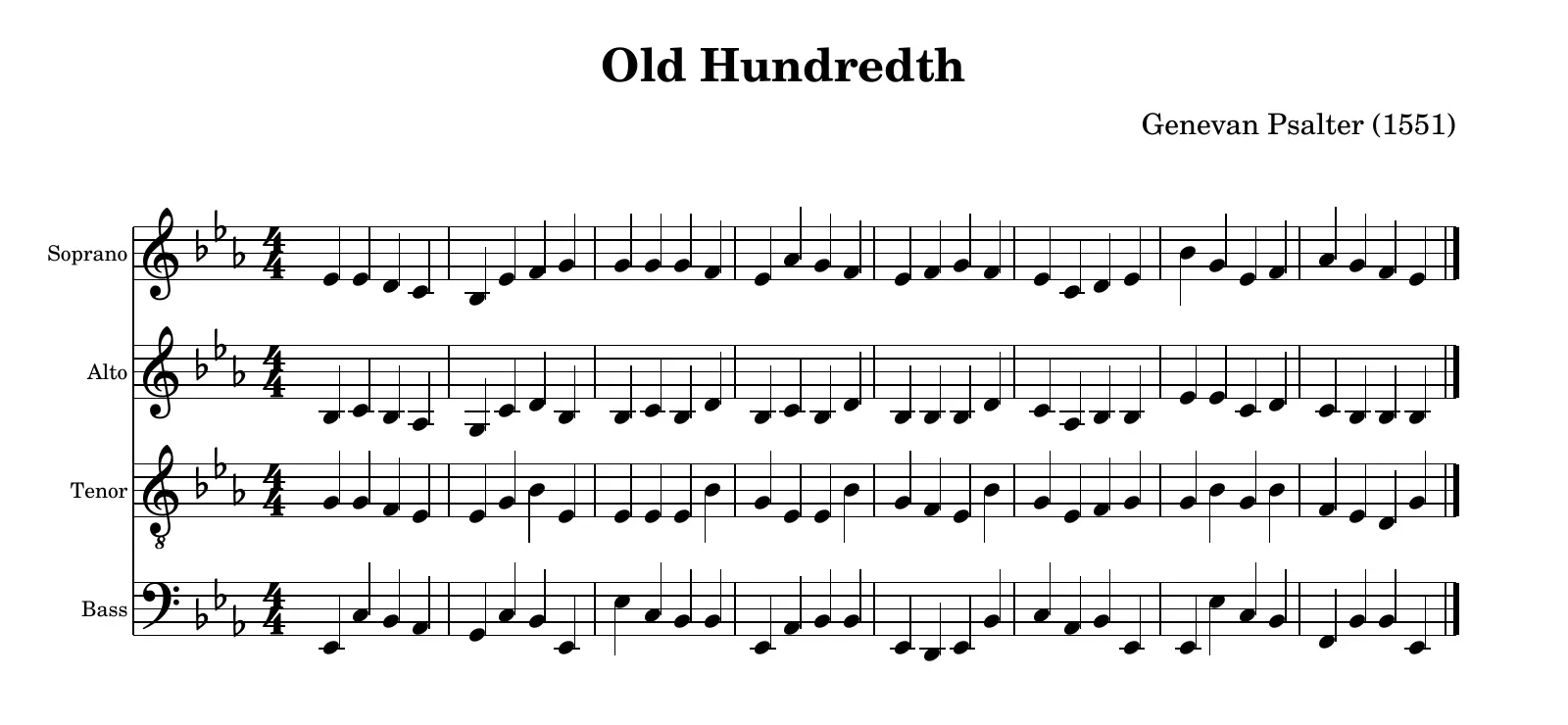
From the guide that came with it
Every delivery comes with a written guide. These lines are copied from this one.
Why down a major third and not up a minor sixth
There are two ways to get from G major to E-flat major. I chose the nearer one, down a major third. It keeps the tune in a moderate, singable place for the melody (B-flat to B-flat), and the choir moves only four semitones from your original.
If your basses can't manage the low E-flats, I can make that higher version instead.
Performance notes
The score doesn't mark it, but if some basses can't reach the low E-flats and the low D, a common rehearsal option is to have them sing those notes an octave higher while the stronger low voices keep the written octave. That is your decision as director.
Start one like this
The same few questions, with your own music. Nothing runs until you have set a spending limit and pressed Start.
Transpose for a singerTranspose for a singer