Worked example
Piano reduction
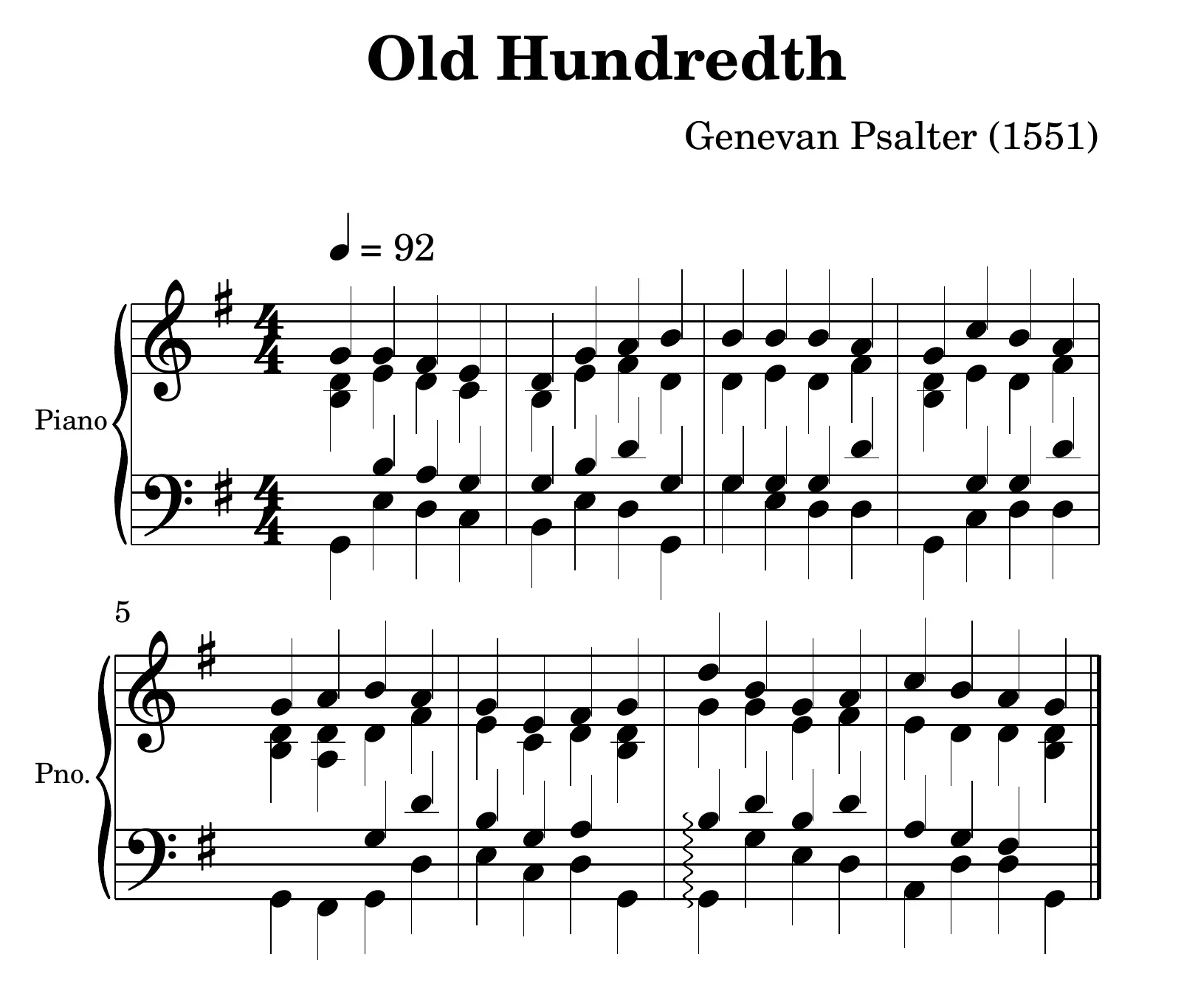
Four voices brought onto two piano staves for choir rehearsal, with every note kept.
A supervised arrangement, not an automatic note-for-note conversion.
What the musician filled in
- The piece
- Old Hundredth, the attached MusicXML
- What is the reduction for?
- Rehearsal
What the studio asked back
Nothing. The form had what it needed, so the work went straight ahead.
How long it took
38 minutes from the moment work began to the files being ready, for this short hymn. A longer score takes longer.
What came back
- The piano reductionPDF, one page
- The same score, editableMusicXML
- One reading of it, as MIDIA playback file, not a recording
- The guideWhat was done, what was not, and how to perform it
From the guide that came with it
Every delivery comes with a written guide. These lines are copied from this one.
Difficulty and playability notes
Bar 7, beat 1: the bass plays G2, as the basses sing it, under the tenor's B3. That's a tenth, so it's marked with a roll sign: play the low G and roll quickly up to the B, catching the G with the pedal if you need to let it go.
If you'd rather not roll it, play the G an octave higher (G3). That keeps both hands within an octave throughout.
What was done and what was not
Every note of all four voices is kept, with the same pitches, octaves, rhythms and spelling. I compared the reduction with your file at all 32 beats and found no differences.
Checked: I viewed the engraved page and checked every chord against the hand-stretch limit. No pianist has played through it yet, and nothing was checked by listening.
Start one like this
The same few questions, with your own music. Nothing runs until you have set a spending limit and pressed Start.
Piano reductionPiano reduction