Worked example
Analyse a score
Keys, harmony, cadences and form, tied to every bar and beat, with the chords written under the notes.
What the musician filled in
- The piece
- Old Hundredth, the attached MusicXML
- How much detail?
- Overview of the whole piece
What the studio asked back
Nothing. The form had what it needed, so the work went straight ahead.
How long it took
21 minutes from the moment work began to the files being ready, for this short hymn. A longer score takes longer.
What came back
- The written analysisKey, harmony, cadences, form and rehearsal suggestions
- The analysis scorePDF, one page: Roman numerals and cadences under the notes
- The same score, editableMusicXML
- The guideWhat was done, what was not, and how to perform it
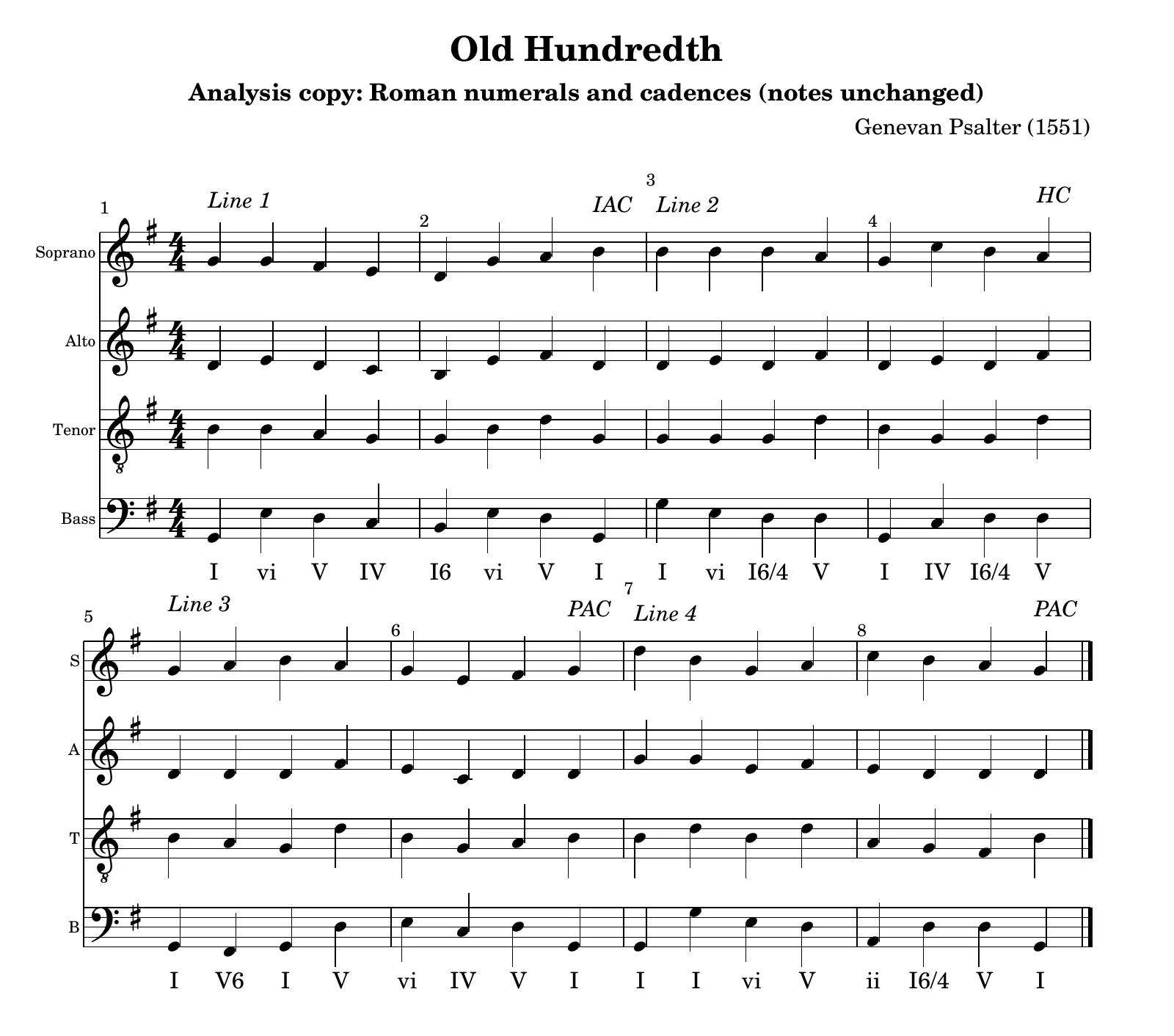
From the analysis
These lines are copied from the written analysis that was delivered.
3. Harmony, beat by beat
3.3 to 4.1 and 4.3 to 5.1 are the same three chords in exactly the same voicing. Learn them once and the choir sings them twice.
5.4–6.1: deceptive motion. V moves to vi instead of I. It happens in the middle of the line, so it is a deceptive progression, not a deceptive cadence. The expected close is postponed and then delivered properly at the end of bar 6.
4. Cadences
Bar 4. A half cadence is a dominant that closes a formal unit. A "dominant arrival" is a dominant that is reached without closing one, for example in the middle of a phrase. Here the V on 4.4 is the last chord of line 2 and ends that phrase, so half cadence is the right label.
Start one like this
The same few questions, with your own music. Nothing runs until you have set a spending limit and pressed Start.
Analyse a scoreAnalyse a score